
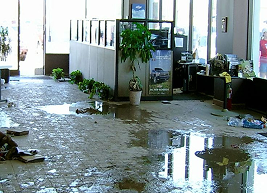
You hear water before you see it. That sound of rushing or dripping somewhere it should not be is one of the most unsettling things a homeowner can experience. Whether it is a burst pipe in February or a flooded basement after a summer storm, your first instinct is to figure out how bad it is and who to call. But here is something most homeowners do not realize until it is too late: the source of that water changes everything, including how your insurance company responds to your claim.
Water damage and flood damage get used interchangeably all the time, and that misunderstanding can cost you thousands of dollars and weeks of headaches. Before you file a claim or pick up the phone, knowing which category you are dealing with is the first step toward smart recovery. Professional water mitigation starts with asking the right questions, and this guide helps you do exactly that.
What Is Water Damage?
Water damage, in the insurance and restoration world, generally refers to damage caused by water that has not yet contacted the ground outside your home. Think of it as an internal problem with an internal origin. The water comes from inside your home or from a structural component that has failed.
In Chicago, that plays out in a few very familiar ways. Burst pipes are one of the most common culprits, especially during deep freezes when temperatures drop hard and fast. A pipe that freezes overnight and splits before you wake up can push hundreds of gallons of water into walls, floors, and ceilings before you even know it happened. Leaking appliances are another frequent offender. A dishwasher supply line that slowly fails or a washing machine hose that lets go can saturate a kitchen or laundry room floor in a hurry. Roof leaks during heavy storms also fall into this category, since the water enters through a structural failure rather than rising from the ground.
Sump pump failures are worth a specific mention because they sit in a gray area. If your sump pump fails and water backs up into your basement, some standard homeowners policies cover it and some do not. It often depends on whether you have a water backup rider attached to your policy. This is one of those details worth confirming with your agent before you ever need to make a claim.
The common thread across all of these scenarios is that the water originates from a plumbing system, an appliance, or a structural component inside the home. That origin matters more than you might expect.
What Is Flood Damage?
Flood damage is a different animal entirely, both in how it happens and how it is covered. According to FEMA, a flood is defined as a general and temporary condition where two or more acres of normally dry land or two or more properties are inundated by water or mudflow. In plain terms, flood water has touched the ground outside before it ever enters your home.
For Chicago homeowners, that scenario shows up in a few ways. Overwhelming surface water from heavy rainfall is the most common, especially in low-lying neighborhoods or areas with older storm infrastructure that cannot keep up with a serious downpour. Rapid accumulation of runoff after a major storm can push water into basements through foundation cracks or window wells. Rivers and streams overflowing their banks after extended rain events bring water across yards and into homes at ground level. Lake Michigan surges, while less frequent, are a real consideration for properties near the lakefront.
The defining characteristic of flood damage is that the water has traveled across the ground and picked up everything along the way before entering your home. That distinction has serious implications for both insurance coverage and the safety of your cleanup process.
Water Damage vs. Flood Damage: The Main Differences
Understanding the definitions is useful, but where this really matters is at the claim stage and in the restoration process itself.
Insurance Coverage
This is the biggest practical difference between the two categories, and it catches homeowners off guard constantly. Standard homeowners insurance typically covers sudden and accidental water damage. A pipe bursts, you file a claim, and your policy responds. That is how it is supposed to work.
Flood damage is almost never covered by a standard homeowners policy. Full stop. To be covered for flood damage, you need a separate policy through the National Flood Insurance Program, commonly known as the NFIP, or through a private flood insurer. Many Chicago homeowners do not carry that coverage, which means a flooded basement from a surface water event can become a significant out-of-pocket expense. If you are not sure what your current policy covers, now is a good time to find out.
Contamination Levels
Beyond insurance, the two types of water carry very different health risks. Water damage from a clean source like a supply line or a roof leak is generally classified as Category 1, or clean water. It is still damaging and still needs professional attention, but the contamination risk is relatively low at the start.
Flood water is almost always classified as Category 3, also called black water. That means it contains a mix of sewage, agricultural runoff, industrial chemicals, bacteria, and pathogens picked up as it traveled across the ground. Walking through it, touching it, or attempting a DIY cleanup without proper protection is genuinely dangerous. Category 3 water requires professional-grade sanitization, not just drying.
Why Professional Water Mitigation Is Essential for Both
Regardless of which category you are dealing with, the clock starts the moment water enters your home. Chicago’s climate makes that urgency even more real. High summer humidity creates ideal conditions for mold growth, which can begin in as little as 24 to 48 hours after a water event. Freezing winters mean that wet structural materials left unaddressed can freeze, expand, and cause additional damage before anyone realizes the scope of the problem.
Professional water mitigation follows a clear sequence designed to stop secondary damage before it starts. First, standing water is extracted as quickly as possible using commercial-grade equipment. Next, structural drying and dehumidification begin, targeting the moisture that has absorbed into walls, floors, and framing. Sanitization follows, and it is especially critical after flood events given the contamination levels involved. Finally, moisture levels are monitored throughout the drying process to confirm the structure has returned to safe levels before any repairs begin.
Skipping steps or cutting the process short is where long-term problems like mold, warped framing, and compromised air quality come from.
Do Not Guess When the Water Is Rising
Whether you are looking at a burst pipe or a basement full of surface water, the source matters and the response needs to match it. Misidentifying the type of water event can mean filing the wrong claim, using the wrong cleanup approach, or leaving contaminated materials behind. None of those outcomes are ones you want to deal with six months down the road.
If you are sorting through water damage vs. flood damage in the Chicago area, GoDry Chicago is available 24 hours a day for professional assessment and emergency response. Do not guess with your restoration. Get the right team on site fast and let the recovery process start the right way.